Wednesday, September 16, 2009

Samsung constructed Tower 2


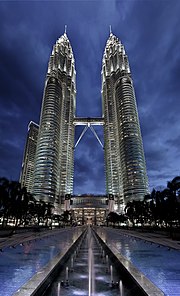
Samsung constructed Tower 2 of the Petronas Twin Towers in Malaysia, the world's tallest twin buildings.

Samsung, as a subcontractor, constructed the Taipei 101 in Taiwan, the world's tallest completed skyscraper.
Samsung at the 2009 Consumer Electronics Show in Las Vegas 1938-1969 SAMSUNG's beginnings
  • 1938: Lee Byung-Chull founded his small business as 'Samsung Store' at Daegu
  • 1950: Lee Byung-Chull founded Samsung trading company in Seoul (YPM)
  • 1951: SAMSUNG Moolsan established (now SAMSUNG Corporation)
  • 1953: Samsung starts sugar production, which has since been spun off into the CJ Corporation
  • 1958: Ankuk Fire & Marine Insurance acquired (renamed SAMSUNG Fire & Marine Insurance in October 1993)
  • 1963: The first Shinsegae department store opens in Seoul
  • 1963: DongBang Life Insurance acquired (renamed SAMSUNG Life Insurance in July 1989)
  • 1964: Samsung starts Tongyang Broadcasting Company (TBC), which later merged with KBS
  • 1965: Samsung starts the Joong-Ang Ilbo daily newspaper, which is no longer a formal subsidiary of Samsung but is still controlled by ex-Chairman Lee Kun-hee's brother-in-law.
  • 1966: Joong-Ang Development established (known today as SAMSUNG Everland)
  • 1969: Samsung Electronics was founded
  • 1969: SAMSUNG-Sanyo Electronics established (renamed SAMSUNG Electro-Mechanics in March 1975 and merged with SAMSUNG Electronics in March 1977)

In 1938, Lee Byung-Chull founded Samsung, a small trading company with forty employees located in Daegu. The company prospered until the Communist invasion in 1950 when he was forced to leave Seoul and start over in Busan. During the war, Samsung's businesses flourished and its assets grew twenty-fold. In 1953, Lee started a sugar refinery—South, Korea’s first manufacturing facility after the Korean War. The company diversified into many areas and Lee sought to establish Samsung as an industry leader in a wide range of enterprises (Samsung Electronics). The company started moving into businesses such as insurance, securities, and retail. In the early 1970s, Lee borrowed heavily from foreign interests and launched a radio and television station (Samsung Electronics).

South Korean President Park Chung-hee’s regime during the 1960s and 1970s would prove a boon for Samsung. Park placed great importance on industrialization, and focused his economic development strategy on a handful of large domestic conglomerates, protecting them from competition and assisting them financially. Samsung was one of these companies. Park banned several foreign companies from selling consumer electronics in South Korea in order to protect Samsung from foreign competition and nurture an electronics manufacturing sector that was in its infancy. “To make up for a lack of technological expertise in South Korea, the South Korean government effectively required foreign telecommunications equipment manufacturers to hand over advanced semiconductor technology in return for acces.
BHAGIRATH ELECTRONICS PVT LTD

Samsung LCD


Samsung is the world's largest manufacturer of Televisions and various other consumer electronics.

Samsung is the world's second largest mobile phone maker.

Compared to other major Korean companies, Samsung survived the Asian financial crisis of 1997-98 relatively unharmed. However, Samsung Motor Co, a $5 billion venture was sold to Renault at a significant loss. Additionally, Samsung manufactured a range of aircraft from 1980 to 1990s. The company was founded in 1999 as Korea Aerospace Industries(KAI), the result of merger between then three domestic major Aerospace divisions of Samsung Aerospace, Daewoo Heavy Industries and Hyundai Space and Aircraft Company (HYSA). Korea Aerospace Industries(KAI)- largest shareholders as of 2009 (Korea Development Bank 30.53%, Samsung Techwin 20.54%, Doosan(formerly known as Daewoo Heavy Industries)20.54%, Hyundai Motor 20.54%). Most importantly, Samsung Electronics (SEC) was officially spun-off from the Samsung Group and has since come to dominate the group and the worldwide semiconductor business, even surpassing worldwide leader Intel in investments for the 2005 fiscal year. Samsung's brand strength has greatly improved in the last few years.[12]

Samsung became the largest producer of memory chips in the world in 1992, and is the world's second-largest chipmaker after Intel (see Worldwide Top 20 Semiconductor Market Share Ranking Year by Year).[13] From 1999 to 2002, Samsung conspired with Hynix Semiconductor, Infineon Technologies, Elpida Memory (Hitachi and NEC) and Micron Technology to fix the prices of DRAM chips sold to American computer makers. In 2005 Samsung agreed to plead guilty and to pay a $300 million fine, the second-largest criminal antitrust fine in the US history

Samsung groups

samsung dg camera

Samsung is currently the world's No. 3 maker of compact cameras.[18]

Samsung is the world's largest producer of DRAM, SRAM and Flash Memory.

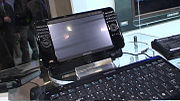
Samsung is a leading manufacturer of computers such as the Q1 Ultra Mobile PC.

Samsung is the world's largest manufacturer of LCD displays.

Samsung, the world’s number one manufacturer of CRT and TFT computer monitors.[20]

Samsung is the world's 4th-largest manufacturer of Hard disk drives.

Samsung SDI Co., the world's second- largest maker of Lithium-ion batteries.[21]

Samsung is the world's second- largest maker of multifunction printers.

Device solutions business

Currently, Samsung has sixteen products that have dominated the world’s market share, including: DRAM, color cathode-ray tube TVs (CPT, CDT), SRAM, TFT-LCD glass substrates, TFT-LCD, STN-LCD, tuner, CDMA handset, color television (CTV), monitor, flash memory, LCD Driver IC (LDI), PDP module, PCB for handheld (mobile phone plates), Flame Retardant ABS, and Dimethyl Formamide (DMF).[22]

Plus in the Television market, Samsung and LG make the only screens for LCD TFT televisions and then later sell them on to the other companies.

According to Interbrand and BusinessWeek, Samsung’s brand value ranked 43rd (USD 5.2billion) in 2000, 42nd (USD 6.4 billion) in 2001, 34th (USD 8.3 billion) in 2002, 25th (USD 10.8 billion) in 2003, 21st (USD 12.5 billion) in 2004, and 20th (14.9 billion) in 2005 among top global companies.

In terms of export that directly contributes to the Korean economy, Samsung took up 18.1% of the all exports with USD 31.2 billion in 2000 and 20.7% with USD 52.7 billion in 2004. In addition, Samsung's tax payments to the Korean government in 2003 was KRW 6.5 trillion, which is about 6.3% of total tax revenue.

The market value of Samsung in 1997 reached KRW 7.3 trillion in 1997, which amounted to 10.3% of the Korean market but this figure increased to KRW 90.8 trillion taking up 22.4% in 2004.

Moreover, the annual net profit of Samsung marked KRW 5.8 trillion in 2001, KRW 11.7 trillion in 2002, KRW 7.4 trillion in 2003, and KRW 15.7 trillion in 2004, showing forth a steady increase.

In order to enhance the working environment and build a strong and trustworthy foundation, the semiconductor sector of Samsung Electronics has been conducting a ‘Great Workplace Program’ called GWP since 1998. Then, in 2003, GWP has spread throughout the entire Samsung Group as Samsung Fire and Marine Insurance, Samsung SDI, Samsung Everland, Samsung Corporation, Cheil Industries, Samsung Networks, and others started to apply its core principles. In 2006, 9 subsidiary companies of Samsung Electronics, 80 overseas branches, and 130 overseas business sectors have reported that they are actively applying the GW.

BHAGIRATH ELECTRONICS APVT L.T.D.;DEALER

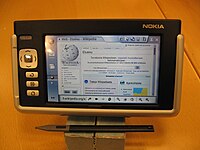
The Nokia 770 Internet Table

Manufacturer Nokia
Type Internet appliance
Retail availability 2005-11-03
Media RS-MMC or MMCmobile
Operating system Internet Tablet OS 2006 (Maemo (operating system) 2.2)
Power BP-5L Li-Polymer 1500 mAh Battery
CPU 252 MHz Texas Instruments OMAP 1710
Memory 64MB Random Access Memory, 128MB Flash
Display 800 × 480 resolution, 4.13 in diagonal, widescreen
Input Touchscreen
Connectivity IEEE 802.11g, Bluetooth
Successor Nokia N800
The Nokia 770 Internet Tablet is a wireless Internet appliance from Nokia, original
BROUGHT TO YOU BY RAM B SAH THANKS

LG touch watch

In 2006, LG recorded a brand growth of 14%.[3] Now the world's largest plasma panel manufacturer,[4] its affiliate, LG Display, is one of the largest manufacturers of liquid crystal displays. Also in 2006, the company's mobile phone division, LG Mobile, marketed the LG Chocolate phone, changing the company's image of the maker of thick 3G phones. It now focuses on the design and marketing of phones such as the LG Shine, the LG Glimmer and LG Prada (KE850). As a result, the company was picked as "The Design Team of the Year" by the Red Dot Design Award in 2006~2007 and is often called the "New Apple" in the industry and online communities.
Billboards at Dundas Square in Toronto, Canada, featuring an LG advertisement.
LG's 3G touch watch mobile phone

Company history

The company was originally established in 1958 as GoldStar, producing radios, TVs, refrigerators, washing machines, and air conditioners.[5] The LG Group was a merger of two Korean companies, Lucky (from the Korean "Nakhui") and GoldStar, from which the abbreviation of LG was derived. The current "Life's Good" slogan is a backronym. Before the corporate name change to LG, household products were sold under the brand name of Lucky, while electronic products were sold under the brand name of GoldStar (Hangul:금성). In January 2009 LG was able to buy the domain name, LG.com, placing it among the companies who own their two letter brand's domain name.[6]

In 1994 GoldStar gained sponsorship from The 3DO Company to make the first 3DO Interactive Multiplayer. In 1995, GoldStar was renamed LG Electronics, and acquired Zenith Electronics of the United States. LG Solar Energy is a subsidiary formed in 2007 to allow LG Chem to supply polysilicon to LG Electronics for production of solar cells. In 2008, LG took its first dive into the solar-panel manufacturing pool, as it announced a preliminary deal to form a joint venture with Conergy. Under the deal, set to be completed by year's end, LG would acquire a 75 percent stake in Conergy's Frankfurt solar-panel plant.[7] LG has produced camcorders called ARTCAM and DSLRs [8]

Sponsorship

LG Electronics sponsored the English football club Leicester City and Weyside Rovers (Guildford) from 2000 until 2002. LG Electronics currently sponsors the English football clubs Fulham F.C deals pulled together at that time by the ex-Marketing Director John Bernard, who now works for the competition, Sony Ericsson. LG also sponsor the Fremantle Football Club (an Australian Football League team) , the Australian National Rugby League club Cronulla Sharks and the Argentinian club Boca Juniors.

During the period 2001-2003 the company sponsored the snooker Grand Prix. During these years the tournament was known as the LG Cup.

LG now also sponsors London Fashion Week and the LG Arena in Birmingham.[9]

In 2008 LG became sponsors of the Extreme Sport 'FSO4 Freeze' festival[10] and in January 2009 LG became a Global Partner and Technology Partner of Formula One.

GSMA Mobile World

WorldCongress is the combination of the world's largest exhibition for the mobile industry and a congress featuring prominent Chief Executives representing mobile operators, vendors and content owners from across the world. The event, initially named as GSM World Congress and later renamed as the 3GSM World Congress, is still often referred to as the GSM World Congress or simply the 3GSM.

In 2007, approximately 55,000 people attended.

The GSM Association Mobile. WorldCongress in 2008 took place at the Fira de Barcelona, Catalonia, Spain, in February. Until 2006, when it moved to Barcelona, it took place in Cannes.

GSM Association Mobile. WorldCongress 2008 statistics

GSMA Mobile World Congress
  • In total, more than 55,000 visitors — including delegates, exhibitors, contractors and media — attended the event.
  • More than 230 chief executives and other high-level speakers from across the world attended the show.
  • More than 43% of conference attendees hold C-level positions within their organizations.
  • 2,700 international print, Web and broadcast media covered the show.
  • 1,300 companies exhibited their offering across 1,500 stands with approximately 29,000 square meters of exhibition space and 30,000 of square meters of hospitality space.

The 2009 GSM Association Mobile. WorldCongress took place from Monday, February 16, to Thursday, February 19. The first day was dominated by Microsoft-related announcements, such as their increased partnership with LG and demonstrations of their new Windows Mobile 6.5 Operating System.

3G- MOBILE

Like other GSM phone, GSM-R equipment can transmit data and voice. New GSM-R features for mobile communication are based on GSM, and are specified by EIRENE project. Call features are:

  • PtP Call: Point-to-Point Call, the same type of call as a normal GSM call
  • VGCS: Voice Group Call System, quite similar to walkie-talkie communication
  • VBS: Voice Broadcast System, like a VGCS but only the call initiator can speak (the other are only listeners)
  • REC: Railways Emergency Call, it is a special VGCS with high priority dedicated to emergencies.
  • Priority control of all the different calls (PtP, VGCS, VBS and REC calls)

There are other additional features:

  • Functional Addressing, alias system to call someone registered on the GSM-R network, only by knowing the temporary function user (engine driver of train such-and-such, …)
  • Shunting mode, when users work on the tracks.

GSM-R features

A graphical GSM-R cab radio interface - capable of displaying different languages
GSM-R user interface with colour display

ASCI (Advanced Speech Call Items) features

VGCS (Voice Group Call Service)

VGCS allows a great number of users to participate in the same call. This feature imitates the analogue PMR (Private Mobile Radio) group call with the PTT key (Push-to-Talk).
Three kinds of users are defined: the Talker, the Listener and the Dispatcher. The talker can become a listener by releasing the PTT key and a listener becomes a talker by pressing the PTT key.
The main advantage of VGCS compared to multi-party calls (the GSM conference call feature) is the spectrum efficiency. Indeed, when many users are in the same cell they will use only one frequency for all listeners and two frequencies for the talker (as in point-to-point call). In a multi-party call, one timeslot is dedicated to each user.

VBS (Voice Broadcast Service)

VBS is a broadcast group call: this means that compared to VGCS, only the initiator of the call can speak. The others who join the call can only be listeners. This kind of call is mainly used to broadcast

Antivirus software

Antivirus (or anti-virus) software is used to prevent, detect, and remove malware, including computer viruses, worms, and trojan horses. Such programs may also prevent and remove adware, spyware, and other forms of malware.

A perfect sodftware variety of strategies are typically employed. Signature-based detection involves searching for known malicious patterns in executable code. However, it is possible for a user to be infected with new malware in which no signature exists yet. To counter such so called zero-day threats, heuristics can be used. One type of heuristic approach, generic signatures, can identify new viruses or variants of existing viruses for looking for known malicious code (or slight variations of such code) in files. Some antivirus software can also predict what a file will do if opened/run by emulating it in a sandbox and analyzing what it does to see if it performs any malicious actions. If it does, this could mean the file is malicious.

However, no matter how useful antivirus software is, it can sometimes have drawbacks. Antivirus software can degrade computer performance if it is not designed efficiently. Inexperienced users may have trouble understanding the prompts and decisions that antivirus software presents them with. An incorrect decision may lead to a security breach. If the antivirus software employs heuristic detection (of any kind), the success of it is going to depend on whether it achieves the right balance between false positives and false negatives. False positives can be as destructive as false negatives. In one case, a faulty virus signature issued by Symantec mistakenly removed essential operating system files, leaving thousands of PCs unable to boot.[1] Finally, antivirus software generally runs at the highly trusted kernel level of the operating system, creating a potential avenue of attack.

In addition to the drawbacks mentioned above, the effectiveness of antivirus software has also been researched and debated. One study found that the detection success of major antivirus software dropped over a one-year period.

3G- MOBILE

Telecommunications-2000 (IMT-2000), better known as 3G or 3rd Generation, is a family of standards for mobile telecommunications defined by the International Telecommunication Union,[1] which includes GSM EDGE, UMTS, and CDMA2000 as well as DECT and WiMAX. Services include wide-area wireless voice telephone, video calls, and wireless data, all in a mobile environment. Compared to 2G and 2.5G services, 3G allows simultaneous use of speech and data services and higher data rates (up to 14.0 Mbit/s on the downlink and 5.8 Mbit/s on the uplink with HSPA+). Thus, 3G networks enable network operators to offer users a wider range of more advanced services while achieving greater network capacity through improved spectral efficiency.

The International Telecommunication Union (ITU) defined the third generation (3G) of mobile telephony standards – IMT-2000 – to facilitate growth, increase bandwidth, and support more diverse applications. For example, GSM (the current most popular cellular phone standard) could deliver not only voice, but also circuit-switched data at download rates up to 14.4 kbps. But to support mobile multimedia applications, 3G had to deliver packet-switched data with better spectral efficiency, at far greater bandwidths

Sunday, September 13, 2009

. Laptop Computer

A subnotebook, also called an ultraportable by some vendors, is a laptop designed and marketed with an emphasis on portability (small size, low weight and longer battery life) that retains the performance of a standard notebook.[15] Subnotebooks are usually smaller and lighter than standard laptops, weighing between 0.8 and 2 kg (2 to 5 pounds);[10] the battery life can exceed 10 hours[16] when a large battery or an additional battery pack is installed.

To achieve the size and weight reductions, ultraportables use high resolution 13" and smaller screens (down to 6.4"), have relatively few ports, employ expensive components designed for minimal size and best power efficiency, and utilize advanced materials and construction methods. Some subnotebooks achieve a further portability improvement by omitting an optical/removable media drive; in this case they may be paired with a docking station that contains the drive and optionally more ports or an additional battery.

The term "subnotebook" is usually reserved to laptops that run general-purpose desktop operating systems such as Windows, Linux or Mac OS X, rather than specialized software such as Windows CE, Palm OS or Internet Tablet OS.

Friday, September 11, 2009

models

Abstractions, concepts, and theories
Business model, a framework expressing the business logic of a firm
Business process modeling, the activity of representing processes of an enterprise
Causal model, an abstract model that uses cause and effect logic
Computer model, a computer program which attempts to simulate an abstract model of a particular system
computer simulation
Data model, a description of the structure of a database
Ecosystem model, a mathematical representation of an ecosystem
Enterprise modelling
Geologic modelling, the applied science of creating computerized models of geologic features
Mathematical model, an abstract model that uses mathematical language
Mechanistic model, a description of a system in terms of its constituent parts and mechanisms
Model (abstract), an abstraction or conceptual object used in the creation of a predictive formula
Model building (particle physics), the construction of new models beyond the Standard Model in particle physics
Model Driven Engineering, the systematic use of models in engineering
Model (economics), a theoretical construct representing economic processes
Model (macroeconomics), an economic model representing a national or regional economy

sports

erminant of the outcome (winning or losing), but the term is also used to include activities such as mind sports (a common name for some card games and board games with little to no element of chance) and motor sports where mental acuity or equipment quality are major factors. Sport is commonly defined as an organized, competitive and skillful physical activity requiring commitment and fair play. Some view sports as differing from games based on the fact that there are usually higher levels of organization and profit (not always monetary) involved in sports. Accurate records are kept and updated for most sports at the highest levels, while failures and accomplishments are widely announced in sport news.

The term sports is sometimes extended to encompass all competitive activities in which offense and defense are played, regardless of the level of physical activity. Both games of skill and motor sport exhibit many of the characteristics of physical sports, such as skill, sportsmanship, and at the highest levels, even professional sponsorship associated with physical sports.

Sports that are subjectively judged are distinct from other judged activities such as beauty pageants and bodybuilding shows, because in the former the activity performed is the primary focus of evaluation, rather than the physical attributes of the contestant as in the latter (although "presentation" or "presence" may also be judged in both activities).

Sports are most often played just for fun or for the simple fact that people need exercise to stay in good physical condition.

music

Music is an art form whose medium is sound. Common elements of music are pitch (which governs melody and harmony), rhythm (and its associated concepts tempo, meter, and articulation), dynamics, and the sonic qualities of timbre and texture. The word derives from Greek μουσική (mousike), "(art) of the Muses".[1]

The creation, performance, significance, and even the definition of music vary according to culture and social context. Music ranges from strictly organized compositions (and their recreation in performance), through improvisational music to aleatoric forms. Music can be divided into genres and subgenres, although the dividing lines and relationships between music genres are often subtle, sometimes open to individual interpretation, and occasionally controversial. Within "the arts", music may be classified as a performing art, a fine art, and auditory art.

To many people in many cultures music is an important part of their way of life. Greek philosophers and ancient Indian philosophers defined music as tones ordered horizontally as melodies and vertically as harmonies. Common sayings such as "the harmony of the spheres" and "it is music to my ears" point to the notion that music is often ordered and pleasant to listen to. However, 20th-century composer John Cage thought that any sound can be music, saying, for example, "There is no noise, only sound."[2] According to musicologist Jean-Jacques Nattiez, "the border between music and noise is always culturally defined—which implies that, even within a single society, this border does not always pass through the same place; in short, there is rarely a consensus.... By all accounts there is no single and intercultural universal concept defining what music might be, except that it is 'sound through time'."[

Wednesday, September 9, 2009

sexual attration

Sexual attraction or sex appeal refers to a person's ability to attract in a sexual or erotic manner the interest of another person. The attraction may be to a physical quality of a person, or it may be to other more nebulous qualities of the person.

Though attempts have been made to devise objective criteria of sexual attractiveness, a person's sexual attractiveness is to a large extent a subjective measure dependent on another person's interest, perception and sexual orientation. For example, a gay or lesbian would typically find a person of the same-sex to be more attractive then one of the other gender. A bisexual person would typically find both sexes to be equally attractive.

Contents [hide]
1 Social and biological factors
2 See also
3 Notes
4 References
5 External links


Social and biological factors
Human sexuality has many aspects. In biology, sexuality describes the reproductive mechanism as well as the basic biological drive that exists in all species and can encompass sexual intercourse and sexual contact in all its forms. There are also emotional and physical aspects of sexuality. These relate to the bond that exists between individuals, which may be expressed through profound feelings or emotions. Sociologically, it can cover the cultural, political, and legal aspects; and philosophically, it can span the moral, ethical, theological, spiritual or religious aspects.

Which aspects of a person's sexuality attracts another is influenced by cultural factors, and has varied over time, as well as personal factors. Influencing factors may be determined more locally among sub-cultures, across sexual fields, or simply by the preferences of the individual. These preferences come about as a result of a complex variety of genetic, psychological, and cultural factors.

A person's physical appearance has a critical impact on their sexual attractiveness. This involves the impact one's appearance has on the senses, especially in the beginning of a relationship:

Visual perception (how the other looks and acts);
Audition (how the other's voice and/or movements sound).

business

A business (also called a firm, or enterprise) is a legally recognized organization designed to provide good s and/or services to ...
22 KB (2939 words) - 20:54, 8 September 2009
Master of Business Administration The Master of Business Administration (MBA) is a master's degree in business administration , which attracts people from a wide range of ...
36 KB (4547 words) - 16:21, 1 September 2009
Harvard Business School Harvard Business School (HBS) is a business school in the United States. ranked number one among American business schools by the U.S. News. ...
26 KB (3888 words) - 14:42, 4 September 2009
Administration (business) In business , administration consists of the performance or management of business operations

auto insurance

Vehicle insurance (also known as auto insurance, car insurance, or motor insurance) is insurance purchased for cars, trucks, and other vehicles. Its primary use is to provide protection against losses incurred as a result of traffic accidents and against liability that could be incurred in an accident.

Contents [hide]
1 Public policy
1.1 Australia
1.2 Canada
1.3 Hungary
1.4 Ireland
1.5 Romania
1.6 South Africa
1.7 United Kingdom
1.8 United States
2 Coverage levels
3 Excess
3.1 Compulsory excess
3.2 Voluntary excess
4 Basis of premium charges
4.1 Gender
4.2 Age
4.3 Marital status
4.4 Vehicle classification
4.5 Distance
4.5.1 Reasonable estimation
4.5.2 Odometer-based systems
4.5.3 GPS-based system
4.5.4 OBDII-based system
5 Auto insurance in the United States
5.1 Coverage available
5.1.1 Liability
5.1.1.1 Combined single limit
5.1.1.2 Split limits
5.1.2 Full coverage
5.1.2.1 Collision
5.1.2.2 Comprehensive
5.1.2.3 Uninsured/underinsured Motorist coverage
5.1.2.4 Loss of use
5.1.2.5 Loan/lease payoff
5.1.2.6 Towing
5.1.2.7 Personal Property
6 Behavior based insurance
7 See also
8 External links
9 Notes


[edit] Public policy
In many jurisdictions it is compulsory to have vehicle insurance before using or keeping a motor vehicle on public roads. Most jurisdictions relate insurance to both the car and the driver, however the degree of each varies greatly.

A 1994 study by Jeremy Jackson and Roger Blackman[1] showed, consistent with the risk homeostasis theory, that increased accident costs caused large and significant reductions in accident frequencies.

Sunday, September 6, 2009

clothes dryer

dryer or tumble dryer is a household appliance that is used to remove moisture from a load of clothing and other textiles, generally shortly after they are cleaned in a washing machine.

Most dryers consist of a rotating drum called a tumbler through which heated air is circulated to evaporate the moisture from the load. The tumbler is rotated relatively slowly in order to maintain space between the articles in the load. In most cases, the tumbler is belt-driven by an induction motor.

Using these machines may cause clothes to shrink, become less soft (due to loss of short soft fibers/ lint) and fade. For these reasons, as well as environmental concerns, many people use open air methods such as a clothes line and clotheshorse

loans

... Although this article focuses on monetary loans, in practice any material object might be lent. ...
9 KB (1352 words) - 16:06, 29 August 2009
Student loan (redirect from Student loans) Student loans are loan s offered to students to assist in payment of the costs of professional education . These loans usually carry a ...
3 KB (458 words) - 18:21, 5 September 2009
Loanword A loanword (or loan word) is a word borrowed from one language and incorporated ... Direct loans , expressions

slim disktop

Manager (KDM) is a graphical login interface for computers using Unix-like operating systems. It is the K Desktop Environment replacement for XDM, the default X display manager (from which it was originally developed). KDM allows users to pick their session type on a per-login basis. Like KDE, it uses the Qt toolkit and can be configured from the KDE control center. It also allows theming and user photos

new computer lab

Computer Graphics Lab was a computer lab located at the New York Institute of Technology (NYIT) back in the late 1970s. It was originally located at the "pink building" on the NYIT campus.

The lab was started to produce a short high quality feature with the project name of The Works. This was never completed although millions of dollars were invested into it. It was to be a 90 minute feature that was to be the first entirely Computer generated CGI movie. Production mainly focused around DEC PDP and VAX machines.

It was linked to Computer Graphics Laboratory Inc.

Many of the original CGL team now form the elite of the CG and computer world with members going on to Silicon Graphics, Microsoft, Cisco, NVIDIA and others, including Pixar President Ed Catmull, Pixar co-founder and Microsoft Graphics Fellow Alvy Ray Smith, Pixar co-founder Ralph Guggenheim, Walt Disney Feature Animation Chief Scientist Lance Joseph Williams, Dreamworks Animator Hank Grebe, Netscape and Silicon Graphics founder Jim Clark (James H. Clark), Microsoft Graphics Fellow Jim Blinn, Thad Beier, Andrew Glassner and Tom Brigham. Systems programmer Bruce Perens went on to co-found the Open Source initiative.

black lcd

monitor or display (sometimes called a visual display unit) is a piece of electrical equipment which displays images generated by devices such as computers, without producing a permanent record. The monitor comprises the display device, circuitry, and an enclosure. The display device in modern monitors is typically a thin film transistor liquid crystal display (TFT-LCD), while older monitors use a cathode ray tube (CRT).

toshiba


Toshiba was founded by the merging of two companies in 1939.

One, Tanaka Seizosho (Tanaka Engineering Works), was Japan's first manufacturer of telegraph equipment and was established by Hisashige Tanaka in 1875. In 1904, its name was changed to Shibaura Seisakusho (Shibaura Engineering Works). Through the first part of the 20th century Shibaura Engineering Works became a major manufacturer of heavy electrical machinery as Japan modernized during the Meiji Era and became a world industrial power

hp laptop

Pavilion dv4 is a model series of laptop/mobile computers manufactured by Hewlett-Packard Company that features a 14.1" diagonal display. The HP Pavilion dv5 features a 15.4" and the HP Pavilion dv7 a 17" display.

Contents [hide]
1 Models
2 Weight And Dimensions
3 Customizable Features
4 References